
An easy question, then a harder one
Ask a sixth-former why the Sun appears to move across the sky and you’ll probably get a perfectly respectable answer: because the Earth rotates. Lovely. Tick. One point for science, and we can all go and get a coffee.
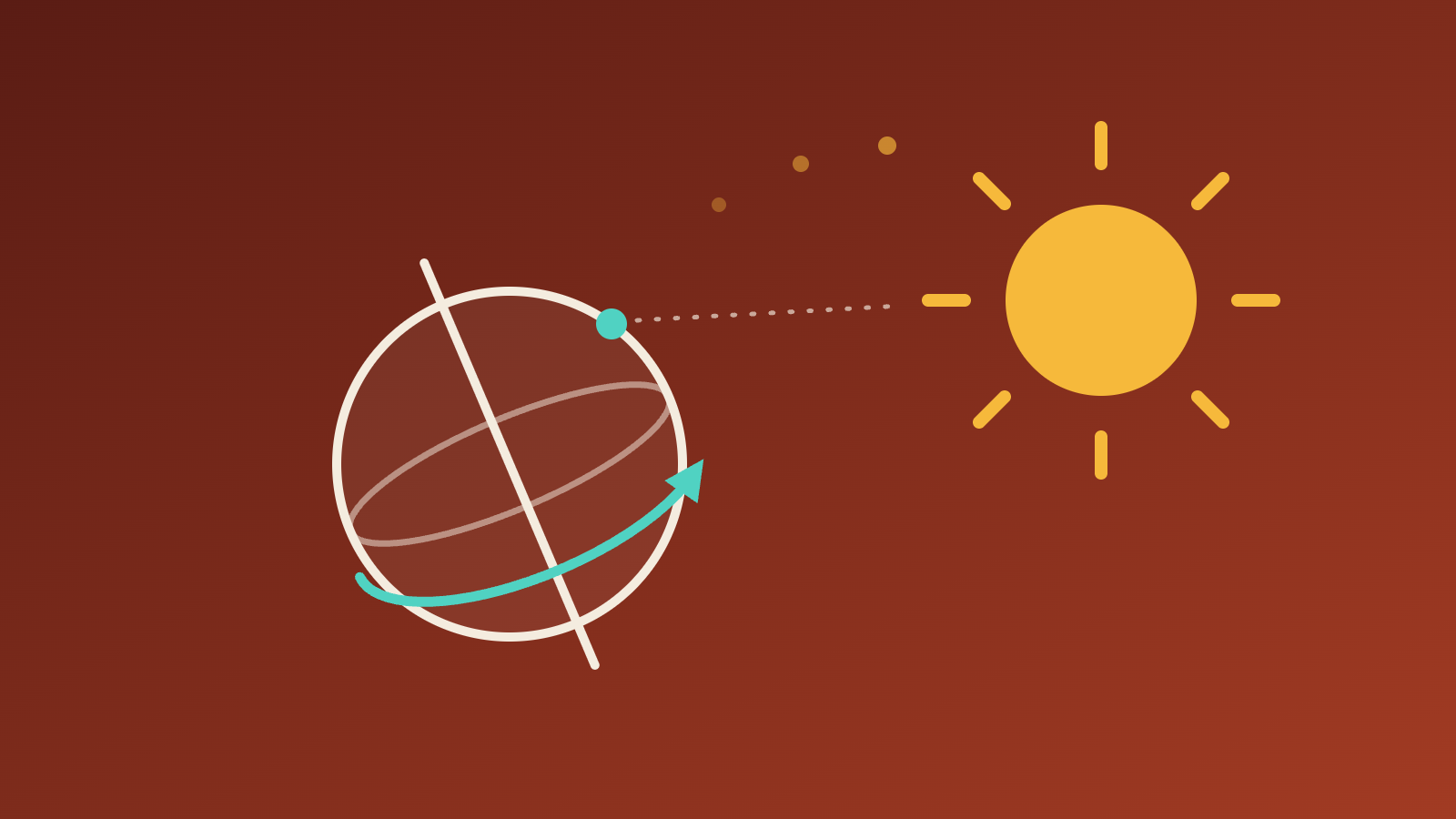
Now hand them a pencil. Ask them to draw the Earth, mark where they’re standing, show which way it spins, label east and west, draw the sunlight coming in, and explain what someone on the ground would actually see.
That’s usually when the confidence starts to wobble. Where exactly is the observer? Which way is the globe turning in the drawing? Are we looking from the ground or from space? And how, precisely, does the spinning produce the Sun’s slow walk across the sky?
A correct sentence has turned into a surprisingly fiddly puzzle. That puzzle sits at the centre of a new study, published on 9 October 2026 in Physical Review Physics Education Research, and it carries a lesson for anyone who teaches anything at all: a student can remember every piece of an explanation without knowing how the pieces fit together.
What the researchers did
Rebecca Raskin and her colleagues at KU Leuven in Belgium (Wim Van Dooren, Hans Van Winckel and Mieke De Cock) have been chipping away at this topic for a while. An earlier study from the same group, published in 2022, found that despite being taught it, most secondary students had only a rudimentary grasp of how the Sun and stars appear to move. This new paper zooms in to ask why.
Rather than setting a written test, the team sat down with students aged 16 to 18 one at a time. They asked them to think aloud, sketch their ideas and work with three-dimensional materials. It’s slow, painstaking work, but it lets you see how a student is actually putting their knowledge together, not just whether the final answer is right.
The researchers found students repeatedly tripping over five aspects of the problem:
- Cardinal directions: linking east, west and the rest to what’s going on.
- Distance: reasoning sensibly about how things are spaced out.
- Earth’s axis: knowing which way it points.
- Lines of sight and sunlight: connecting where the observer is looking with where the light is coming from.
- The Sun’s orbital plane: getting the relevant orientation right.
The headline finding is the interesting bit. Students often understood several of these pieces individually. What they struggled to do was assemble them into one coherent explanation viewed from outside the Earth.
A box of parts isn’t a working machine
We tend to talk about students having “misconceptions”, as if there’s one wrong idea lodged in their head that we just need to find and swap out. This study points to something different and, I think, more common: a fragmented model. The student has several correct ideas, but the connections between them are missing, muddled or contradict each other.
It’s a bit like owning every part of a bicycle laid out neatly on the garage floor. Technically you have a bike. You just can’t ride it anywhere.
This idea isn’t new. The education researcher Andrea diSessa has argued for decades that much of what students know comes in small, loosely connected pieces, rather than as tidy theories, right or wrong. Learning, in that view, is less about replacing bad ideas and more about organising the good bits into something that holds together.
Astronomy has a famous cautionary tale here. In the 1980s documentary A Private Universe, freshly gowned Harvard graduates were asked why we have seasons. Many confidently gave the wrong answer, usually something about the Earth being closer to the Sun in summer. These were bright, highly educated people. They’d almost certainly been taught the right explanation. It just hadn’t joined up.
The practical upshot is important. If the problem is fragmentation, giving a student another fact may not help at all. They don’t need more parts. They need help with the assembly.
Standing on a spinning ball and pretending it’s still
Here’s the thing that makes this topic so slippery. We watch the sky from a moving platform. Everything our senses tell us says the ground is still and the Sun is moving. To explain what’s really going on, we have to step off the planet in our imagination, look back at it from space, and then step back onto it again to check the story matches what we see.
That’s an extraordinary thing to ask of anyone. It’s worth remembering that humanity as a whole took a very long time to manage it. For most of recorded history, very clever people looked at the sky and concluded, quite reasonably, that the Sun went round us. The view from the ground is persuasive. It’s the view we live in.
So when a seventeen-year-old gets tangled up switching between “what I see” and “what’s actually happening”, they’re not being slow. They’re wrestling with the same shift in perspective that took humanity well over a thousand years to settle on.
I find something rather lovely in that. A lot of real understanding, in any subject, involves this kind of double vision: holding your own viewpoint and a wider one at the same time, and seeing how one produces the other. History asks it of us when we try to see events as people lived them and as we understand them now. So does empathy, come to think of it. The Sun just makes it unusually visible.
Making the invisible connections visible
A quick honesty check first: this study didn’t test a teaching method, so I’m not going to pretend it has handed us a proven fix. But its findings point towards some approaches that are well worth trying, and most of them need nothing more than a lamp, a globe and a bit of patience.
Ask for a prediction first. Before you explain anything, ask students what they think is happening and get them to draw it. Why does the Sun seem to shift position during the day? What would someone on the ground see as the Earth turns? This isn’t a trap. A polished spoken answer can hide a lot of uncertainty, and a drawing has a habit of bringing it out.
Get the lamp and globe out. The lamp is the Sun, the globe is the Earth. Stick a bit of Blu Tack on the globe for the observer, keep the axis visible, and turn it slowly. Which side faces the light? What happens to our little observer as it rotates? There’s a catch, though. A student can spin a globe perfectly without understanding why that spin explains the view from the ground. So don’t stop at the demonstration. Ask them what each part represents and how it connects to what the observer sees.
Switch viewpoints, on purpose. Ask for the same situation described twice: once from the ground, once from out in space. Then ask them to link the two. The explanation should hold up whichever way you look at it. If you want to stretch older students, the same trick works for the Sun’s changing path through the year, but that brings in the axial tilt and the Earth’s orbit, so it’s worth building those up separately first.
Annotate everything. Have students add arrows and labels for the axis, the direction of spin, the observer, the incoming sunlight, the observer’s view and the Sun’s apparent movement. The aim isn’t the prettiest diagram in the room. It’s reasoning you can see. If a student can label every part but can’t explain how they relate, you’ve found exactly where to teach next.
Finally, ask for the whole story. Take the prompts away and ask: “Can you explain how the Earth’s rotation makes the Sun appear to move, using your drawing as evidence?” Listen for the causal links, not the vocabulary. If the chain breaks, go back to that link rather than repeating the whole explanation a bit louder.
Not just a problem for astronomers
Once you start looking for fragmented knowledge, you see it everywhere. A pupil can recite evaporation, condensation and precipitation without being able to explain how water actually gets from one to the next. A GCSE student can name every component in a circuit and still be stumped when you ask what happens if you swap one bulb for a brighter one. A history student can list events in perfect order without being able to tell you how one led to another.
In each case, the parts are there. The relationships aren’t.
That has big implications for how we check understanding. When a student struggles, the teacherly instinct is to explain again, and sometimes that’s exactly right. But if the trouble lies in how ideas connect, presenting the same connections in the same way may achieve very little. Sometimes the student needs to do something different instead: predict, draw, build, compare, or put it in their own words. Those activities aren’t magic, and this study doesn’t prove any particular sequence works best. Their real value is diagnostic. Each one gives you a different window into what’s going on in the student’s head.
It helps to keep four kinds of evidence in mind:
- Recall: can they state the facts?
- Explanation: can they join those facts into a coherent account?
- Representation: can they show it in a drawing, diagram or model?
- Application: can they use it to reason about something new?
Nobody needs to tick all four every lesson. But if what we want is genuine understanding, one kind of evidence on its own probably isn’t enough. A correct answer tells us something about what a learner knows. A good explanation tells us how they’re using it.
A note of caution, and a bridge to finish
This was an interview study. That’s its strength, because it gets right inside students’ reasoning, but it also means it describes difficulties rather than testing any cure. It involved students of one age range in one education system, and the practical ideas above are my suggestions drawn from its findings, not things the researchers tried and proved. If you have a go with them, treat them as experiments in your own classroom rather than guaranteed fixes.
With that said, I think this is one of the most useful kinds of study a teacher can read. It doesn’t sell a gadget or a scheme. It simply shows, carefully, how a familiar idea comes apart in real students’ hands, and that’s exactly the information we need to teach it better.
So the next time a student gives you the right words but can’t quite explain the idea, resist the urge to assume they just haven’t memorised enough. They may not need another fact at all. They may need help building the bridge between the facts they already have.
Sources
- Raskin, R., Van Dooren, W., Van Winckel, H. & De Cock, M. (2026). Student understanding of the apparent motion of the Sun. Physical Review Physics Education Research, 22, 020144. Published 9 October 2026.
- Bekaert, H., Van Winckel, H., Van Dooren, W., Steegen, A. & De Cock, M. (2022). Identifying students’ mental models of the apparent motion of the Sun and stars. Physical Review Physics Education Research, 18, 010130. Open access.
- Background on Andrea diSessa’s “knowledge in pieces” and the documentary A Private Universe is drawn from general knowledge of the field rather than sources checked for this post.
Leave a Reply